After the Sirens — Sample
Expected release: early February 2026.
Launch links (ebook/paperback/hardback) will go out to the email list first.
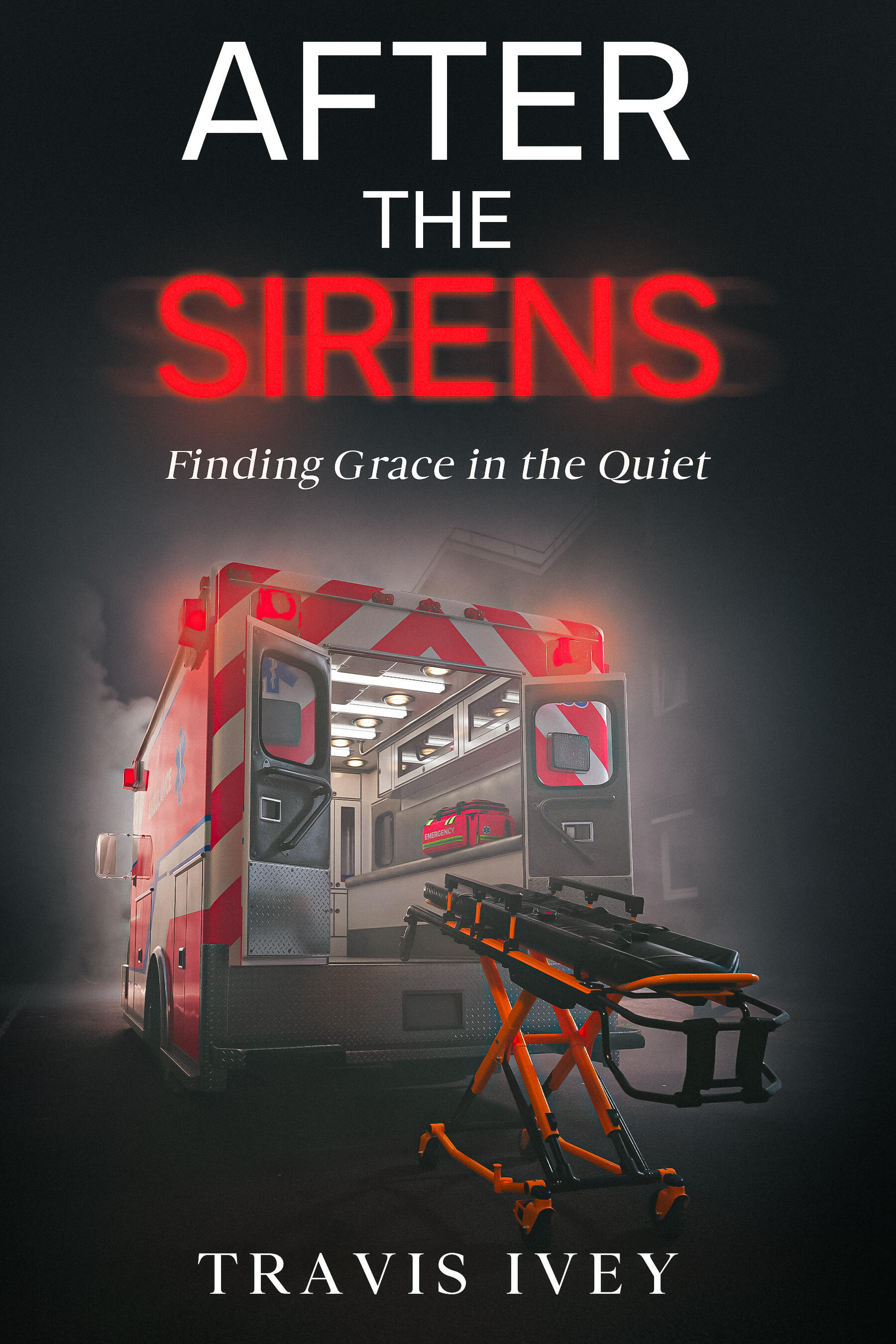
This is a short sample from After the Sirens: Finding Grace in the Quiet.
It’s not about the calls. It’s about the leftovers — what we carry after the scene is cleared, and what healing can look like after the sirens stop.
“Author’s Note”
I’ve spent most of my life serving others. In the church, in the streets, and in emergency services. I know the weight of calls that follow you home. I’ve learned how laughter can numb pain, and I’ve learned how silence can be louder than sirens.
After the Sirens: Finding Grace in the Quiet is not a protocol manual or a self-help book. It’s a field journal from a medic, father, pastor, and man who finally stopped performing long enough to tell the truth to himself. It’s raw, honest, sometimes messy, and anchored in hope.
This book is for people who live on adrenaline and fall apart in the quiet… for medics, firefighters, dispatchers, cops, and for the families who get what’s left after the shift ends.
Excerpts
Excerpt 1
If you spend enough time in this career field, the sirens will become the symphony you crave. The sirens mean you are racing towards chaos, and the chaos is where you find peace and purpose. The tone drops, the engine roars, and the chaos begins to hum in harmony with something deep inside of me. It’s strange how something so alarming lulls you into believing that’s what’s peaceful. You eventually begin to crave chaos because it numbs you to the realities of the job and so many difficult things going on in your personal life.
Excerpt 2
If you’ve ever sat in your truck after a call and stared out the windshield wondering how the hell you’re going to keep doing this or sat in your car in the driveway after getting home from a long shift and you just sit and time passes and you think I can’t even get out of the car, or how do I tell my family about what I have seen today—this chapter is for you. If you’ve ever cried in the supply closet or laughed at a scene you should’ve screamed at—this chapter is for you.
Excerpt 3
One moment, you’re on solid ground—family dinners, weekend plans, normalcy—and the next, you’re chasing chaos down a tunnel lined with trauma and adrenaline. The human body is not designed to see and handle the things we see daily. The deeper Alice went and the more “interesting people” she met, the more she felt comfortable, the more at home she became. Every call is another tea party hosted by madness. Cardiac arrests, mangled cars, overdose after overdose. The Mad Hatter is your sleep schedule. The Red Queen is your trauma, the Cheshire Cat is the chaos. And time? Time doesn’t make sense here.
We don’t live in Wonderland.
Excerpt 4
These aren’t just stories. They’re scars. You can’t box them up and bury them and hope they will go away. They’ll crawl out in your dreams, in the way you flinch at laughter, in how you tighten your grip when someone says, “I’m fine.” They can surface at any time for any reason, and eventually you start looking for a way to numb the pain. I used to think strength meant pretending I was okay. Now I know strength is saying I’m not—and still showing up anyway.
Excerpt 5
The pager wouldn’t shut up. Even when I was off shift, I could hear it — phantom tones echoing in my head, like a ghost refusing to leave. In EMS, we don’t live for what’s now. We live for what’s next. The next call. The next shift. The next crisis. It’s a cycle that convinces us we’re needed, even if we’re falling apart. Somewhere along the line, I stopped chasing peace and started chasing chaos — because chaos felt safer. It gave me something to do. Something to manage. Something louder than the thoughts in my own head. The chaos was peace. The silence? That was unbearable.Excerpt 6
In the beginning, I treated healing like a checklist. Something I could fix and move on from, an assignment, a protocol, or a book that would be the “ah-ha” moment. I quickly learned just how wrong I was. Healing is a grueling process that at times seems all over the map because you start with this gigantic pile that is all the mess in your life. You slowly get deeper and deeper, and little by little you work through more and more. To me, therapy is like the clean laundry pile that we stack up day after day because folding laundry completely sucks and is zero fun. Especially trying to match the socks or trying to find the socks the dryer has eaten.
Excerpt 7
Sometimes the best thing we can give the next generation isn’t advice—it’s honesty. And if you’re new to this field, here’s my truth: This job will allow you to drive emergency traffic down the road getting a new level of respect for just how dumb people can drive. You will feel the rush, get to wear cool uniforms, and at times really uncomfortable pants because they are cheap and cut out for the ruggedness of EMS. This job will allow you to do some really awesome skills and do them flying down the road in the back of the bus, and at times you are doing that while levitating because of your partner’s driving. This job will allow you to see the best and worst of humanity. This job will hurt you—but it doesn’t have to destroy you.
Excerpt 8
What I Hope They Learn From Me Not how to run a code. Not how to read a 12-lead or check a drip rate. What I really want them to learn— is how to stay human. How to show up for their partners. How to leave space for grief. How to not laugh at someone who cries in the truck after a bad call. How to say “I need a minute” and not be ashamed. Because leadership isn’t just about charts and schedules and truck counts. It’s about people. The next ones are watching. And I want them to inherit something better. It’s okay not to be okay. But it’s not okay to stay there alone. Do something that keeps you human. Because if you lose your humanity, this job will eat you alive. And if you find yourself in a place where you can’t breathe anymore— reach out. Even if it feels like no one will answer. I’m proof that someone will.
If this hit you, reply to the email I sent with one line: what part landed?
Travis